Posts

Beyond the Blank Page: How to write opening paragraphs

Image
A Curious Opening Reverses Expectations Are you familiar with the terror of the blank page in the exam room? Or just unsure about your technique in starting an essay? In fact, there are many tried and tested openings that will get your writing off to a confident and winning start. Although there are infinite possible ways of leading into an essay, blog, or news article, there are some common opening gambits that writers rely on (like a game of chess). Before outlining the Seven Openings, here are some points to think about: Is your aim to engage the reader by being relevant, creative, and original? Are you trying to arouse curiosity or to meet expectations? Are you explaining what’s on offer (like a menu), or offering a taster session? In a promotional sense you want to encourage the reader to come through the door: to enter your mental world. Some readers are reluctant, suspicious people who need to be coaxed into your space. Remember that your aim is a happy rel...

The Citizen in the 21st Century - Conference

Image
http://internetsavvy.wikispaces.com/ 1st Global Conference: The Citizen in the 21st Century From : Dr. Rob Fisher/ Inter-Disciplinary.Net Monday 4th February – Wednesday 6th February 2013 Sydney, Australia Call for Presentations: In its most basic conceptualisation, citizenship is thought of as the rights and responsibilities that an individual has, and is owed to, a national government. The political concept of ‘citizenship’, however, is one that has been contested from its very beginning: from above, it has been a mechanism of control and surveillance; while from below, it is has been used as a tool for resistance and claims for rights and representation. In the 21st century, citizenship continues to be a site of contestation as contemporary governments attempt to find a balance between the rights and responsibilities of the populations they are representing. This has been complicated by the changing nature of citizenship: it can no longer be thought of a...

Ten Routes for Community Film Distribution

Image
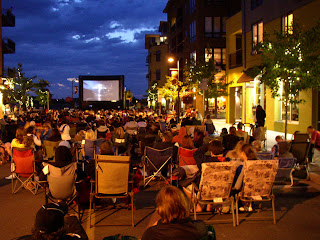
Open Air Cinema 1. How Content and Style determine the Target Group It is alleged that very few community film makers start out with a clear sense of how their finished film will be distributed. This is the vexed question of the target audience. It also brings into play questions about the content of the film – the product – and whether it is fit for purpose in terms of its spectators. That means that the distribution agenda should always already be built into your production and planning process. There’s clearly no point filming disturbing adult scenes that will be unusable for a target group of children. And will people really sit through a two hour community film on any topic, unless they were major participants throughout? Is your film relevant to a wider community, and how can you get it out there? Here are some options to think about: Evaluating Distribution Options 2. Broadcasters: TV, Cable and Satellite (including Free-View Services). Apart fro...

How to 'republish' free material from Wikipedia IS a Corporate Scandal

Image
How profitable, or ethical, is it to republish work that is available for free on wikipedia? I was surprised and rather angry that our free wikipedia article called "Community Film" has now appeared as a "book" edited by Zheng Cirino. But Duc Publishing is just an imprint of VDM Publishing. (See below) Has anyone come across this 'writer' and 'editor' of over 4500 books? Would you spend £25 on what you can have for free? Take a look on Amazon . And the cover bears the curious imprint  'Books for Africa'. OK. So this is about social mission and redistribution, right? I would be curious to see how they reference and attribute my work based on the Wikipedia Edit / page history. But I don't think I need to waste £25 reading my own work, which is already available for free! (Even the Product Description simply copies my words from the opening of the Wikipedia article on COMMUNITY FILM) Here is what one commentator (erich66...

A Blog Tool Kit for Digital Community Media

Image
I can't believe that's over two years of blogs.  Here are some of the most popular posts from the 80+ published :  18 Advantages of visual auto-ethnography for resea... Social Media, Revolution and Historical Consciousn... Reflections on social media and 'anarchy' in Birmi... Civil Society Groups and Volunteer Film Projects Our 3-minute film guide Film Editing for Beginners – Understanding the Pro... Radical Origins of the 'Big Society' ? 30 Tips to help you make an Award Winning Film on ... What is Community Film ? 30 Ways to Put the Community Into Film ... India's answer to Hollywood and No-Budget film pro... A Recipe for Auteur Film Directors (14-point toolk... Participatory Video - the role of the Trainer and ... Beyond CinemaScope and Technicolor: the World of A... Towards an Imperfect Cinema Worldwide Community Film Screenings Postcolonial and Transnational Cinema...

Participatory Video - the role of the Trainer and the Researcher

Image
Namita Singh is currently pursuing a PhD on Participatory Video in UK, at the Open University. She is a researcher and consultant focused on participatory media. We welcome her guest contribution to this site and thank her for her insights into and for sharing her reflections on Participatory Video. "Namita Singh, the Trainer Vs. Namita Singh, the Researcher :  Things I taught and things I learnt!"  This one week taught me so much about doing Participatory Video, as a researcher. Going in, I never thought, it will be as tough – negotiating the thin line between Namita Singh, the trainer, and Namita Singh, the researcher. The former being my role throughout my working life prior to my PhD, the latter, I am supposed to strictly adhere to, so as not to lose sight and data, while I am at it. Every bit is important. Every bit might have some key, some vital insight – a hidden answer to my research questions – some serious business, this! I had wanted to us...

Cult Auteur Film Directors: A 14-point toolkit for your career

Image
1. The auteur typically employs multiple perspectives on the same scene. This approach will enable the auteur to transform a short story into a film of epic proportions. The auteur characteristically demonstrates disregard for linear plotting . For the auteur Repetition is at the core of Deconstruction. 2. The auteur prefers grainy features to suggest the archaic; s/he prefers black and white to colour. The auteur composes lyrical essays on the lure of the silent film era; employs super 8 film, and cuts up video tapes using a manual process. At the other extreme, the auteur films his homage to Battleship Potemkin (1925) using only mobile cell-phones and skateboards. 3. The self-presentation of the auteur in interview situations is a form of self-preservation. There are two starting positions that should be adhered to without irony: (a) sentences that deploy stream-of-consciousness; multiple subclauses (think Henry James's Golden Bowl ); polysyllabic terms - especially...