Posts

Showing posts with the label participatory

Digital Storytelling and Mind-weaving Women

Image
The words 'textus' and 'contextus' in Latin were associated with weaving, plaiting, interlacing, wrought together, interwoven ... Weaving was a complex process that was often the work of women as part of their domestic duties. The most famous weaver in Western classical culture was Odysseus's wife Penelope. To fend off unwanted suitors during her husband's absence, she tells them that she will marry only when she has finished weaving a funeral shroud for her husband's father Laertes. But each night she undoes part of her completed work in order to delay being forced to accept one of the suitors. Her 'cunning' ( metis ) is a form of knowledge, a kind of artifice, and therefore demonstrates the relationship between the craft of the storyteller and the weaving of the narrative cloth. She is similar to and different from the character role of Helen, who also weaves; but in this case the heroic deeds depicted are a representation of her story. T...

Deadly Cinema and Secret Cinema

Image
At the weekend I picked up in a charity ("thrift") shop a short book by world theatre director and experimenter Peter Brook called The Empty Space , first published in 1968, with a Pelican paperback in 1972. There have been several reprints and it's still a thoughtful discussion of the state of theatre. Where he speculates on 'Theatre' I found myself reflecting on 'Cinema.' It's a curious exercise to displace and compare terminologies and discourses. Sometimes it's quite shocking and sobering as a thought experiment. What did the theatre mean to him in 1968, and what does it mean to us in 2011? How have our ideas about the value(s) and function of cinema evolved alongside, or in opposition to 'theatre' ? If you're curious, his four chapters are titled The Deadly Theatre The Holy Theatre The Rough Theatre The Immediate Theatre I also found myself dreaming about a Secret Cinema . Perhaps a lost chapter of the Brook...

18 Advantages of visual auto-ethnography for research

Image
Video is now cheap and omni-present What is it? Visual auto-ethnography is a form of participant -authored audio-visual storytelling. Still confused? Think video diary and you're almost there. In recent years the availability of more affordable camcorders has meant that researchers and participants can engage in more effective research. Real examples of practical use of video In recent projects I have used flip cameras with participants from ethnic minority communities who were recording their experience of  adult learning as enrichment. In another project we used more expensive cameras in a health setting in order to examine what the priorities were for service users. The footage has had multiple benefits and we continue to develop the use of visual technologies and methodologies: to empower and support the participation of service users and clients; to provide evidence and documentation of outputs and project delivery; to support the creative personalization...

Diminishing Returns and the Broken Promise of Participation

Image
In this blog I offer thirty-one critical responses to the current fashion for participatory projects and methodologies. While my main focus is grounded in playing devil’s advocate to the evangelical exponents of participatory video, I am very open to being shot down - or at least engaged - in counter-dialogues. (Either through the comments section below, or privately by email). Please attribute all quotations from this unpaid work. It is my life. Please also excuse the rhetorical tendency to exaggerate; I’m not using this blog to craft a highly nuanced critical essay.In other work I have addressed problems with, and potential solutions to collaborative models of work. Also, I’m still working through a projection of what comes after the promise of participation... The participatory field is admittedly quite fuzzy, since arts projects in the community may be quite vague about their intended modes or levels of participation; engagement evidence is notoriously ...

Ten Routes for Community Film Distribution

Image
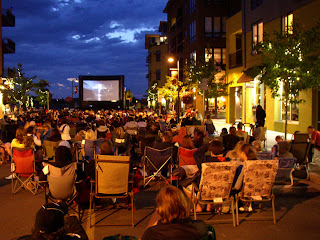
Open Air Cinema 1. How Content and Style determine the Target Group It is alleged that very few community film makers start out with a clear sense of how their finished film will be distributed. This is the vexed question of the target audience. It also brings into play questions about the content of the film – the product – and whether it is fit for purpose in terms of its spectators. That means that the distribution agenda should always already be built into your production and planning process. There’s clearly no point filming disturbing adult scenes that will be unusable for a target group of children. And will people really sit through a two hour community film on any topic, unless they were major participants throughout? Is your film relevant to a wider community, and how can you get it out there? Here are some options to think about: Evaluating Distribution Options 2. Broadcasters: TV, Cable and Satellite (including Free-View Services). Apart fro...

How to 'republish' free material from Wikipedia IS a Corporate Scandal

Image
How profitable, or ethical, is it to republish work that is available for free on wikipedia? I was surprised and rather angry that our free wikipedia article called "Community Film" has now appeared as a "book" edited by Zheng Cirino. But Duc Publishing is just an imprint of VDM Publishing. (See below) Has anyone come across this 'writer' and 'editor' of over 4500 books? Would you spend £25 on what you can have for free? Take a look on Amazon . And the cover bears the curious imprint  'Books for Africa'. OK. So this is about social mission and redistribution, right? I would be curious to see how they reference and attribute my work based on the Wikipedia Edit / page history. But I don't think I need to waste £25 reading my own work, which is already available for free! (Even the Product Description simply copies my words from the opening of the Wikipedia article on COMMUNITY FILM) Here is what one commentator (erich66...

A Blog Tool Kit for Digital Community Media

Image
I can't believe that's over two years of blogs.  Here are some of the most popular posts from the 80+ published :  18 Advantages of visual auto-ethnography for resea... Social Media, Revolution and Historical Consciousn... Reflections on social media and 'anarchy' in Birmi... Civil Society Groups and Volunteer Film Projects Our 3-minute film guide Film Editing for Beginners – Understanding the Pro... Radical Origins of the 'Big Society' ? 30 Tips to help you make an Award Winning Film on ... What is Community Film ? 30 Ways to Put the Community Into Film ... India's answer to Hollywood and No-Budget film pro... A Recipe for Auteur Film Directors (14-point toolk... Participatory Video - the role of the Trainer and ... Beyond CinemaScope and Technicolor: the World of A... Towards an Imperfect Cinema Worldwide Community Film Screenings Postcolonial and Transnational Cinema...

Participatory Video - the role of the Trainer and the Researcher

Image
Namita Singh is currently pursuing a PhD on Participatory Video in UK, at the Open University. She is a researcher and consultant focused on participatory media. We welcome her guest contribution to this site and thank her for her insights into and for sharing her reflections on Participatory Video. "Namita Singh, the Trainer Vs. Namita Singh, the Researcher :  Things I taught and things I learnt!"  This one week taught me so much about doing Participatory Video, as a researcher. Going in, I never thought, it will be as tough – negotiating the thin line between Namita Singh, the trainer, and Namita Singh, the researcher. The former being my role throughout my working life prior to my PhD, the latter, I am supposed to strictly adhere to, so as not to lose sight and data, while I am at it. Every bit is important. Every bit might have some key, some vital insight – a hidden answer to my research questions – some serious business, this! I had wanted to us...