Posts

Showing posts with the label film

Film Editing for Beginners – Understanding the Process

Image
 PURPOSE This blog examines problems and solutions for collaborative or participatory film editing.  I will be arguing that the time and resources spent on a loving and caring editing of the material filmed is a mark of respect for the community participants. I'm saying that we need to value the detailed impact of micro -changes in film editing - it's part of the media butterfly effect. Helpful advice on film editing typically focuses on the technical aspects of the process. Familiarity with Moviemaker, Adobe Premiere, AVID, Final Cut etc will be an advantage, but it is not the primary subject of my advice in this blog. INTRODUCTION Movie editing software may appear formidable to the beginner, volunteer, or amateur, but the reality is that you can learn the basics in half a day. Gaining a professional feel for editing process takes much longer, requires patience, and will not be everyone’s preferred activity. Remember that attentive editing will ...

21 Essential Tips for Community Film editing

Image
Some people like editing, others don’t. Find out early on in the project about people’s skills and preferences, and training requirements – don’t leave it all to the end. Edit the film as you go along, in a rough and ready fashion. If you filled half a tape accidentally recording irrelevant chair legs there’s really no point wasting that space on your hard drive. Respect people’s wish for their contribution to be deleted. Review the day’s shooting with participants, if possible Make notes on the best clips of the day. This is called logging. Invent the system that works best for you. Always label tapes or disks at the time of filming.  Keep a note of the best clips, and the ‘who, what, where, when’ bits of information. It should be possible to create a rough edit based on (a) a selection of the best material actually filmed; (b) the valued work of a trained editing person or small team; (c) referring back to the story and storyboard as guides. In communit...

Ten Routes for Community Film Distribution

Image
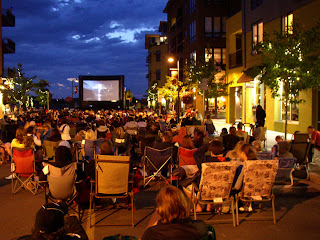
Open Air Cinema 1. How Content and Style determine the Target Group It is alleged that very few community film makers start out with a clear sense of how their finished film will be distributed. This is the vexed question of the target audience. It also brings into play questions about the content of the film – the product – and whether it is fit for purpose in terms of its spectators. That means that the distribution agenda should always already be built into your production and planning process. There’s clearly no point filming disturbing adult scenes that will be unusable for a target group of children. And will people really sit through a two hour community film on any topic, unless they were major participants throughout? Is your film relevant to a wider community, and how can you get it out there? Here are some options to think about: Evaluating Distribution Options 2. Broadcasters: TV, Cable and Satellite (including Free-View Services). Apart fro...

How to 'republish' free material from Wikipedia IS a Corporate Scandal

Image
How profitable, or ethical, is it to republish work that is available for free on wikipedia? I was surprised and rather angry that our free wikipedia article called "Community Film" has now appeared as a "book" edited by Zheng Cirino. But Duc Publishing is just an imprint of VDM Publishing. (See below) Has anyone come across this 'writer' and 'editor' of over 4500 books? Would you spend £25 on what you can have for free? Take a look on Amazon . And the cover bears the curious imprint  'Books for Africa'. OK. So this is about social mission and redistribution, right? I would be curious to see how they reference and attribute my work based on the Wikipedia Edit / page history. But I don't think I need to waste £25 reading my own work, which is already available for free! (Even the Product Description simply copies my words from the opening of the Wikipedia article on COMMUNITY FILM) Here is what one commentator (erich66...

A Blog Tool Kit for Digital Community Media

Image
I can't believe that's over two years of blogs.  Here are some of the most popular posts from the 80+ published :  18 Advantages of visual auto-ethnography for resea... Social Media, Revolution and Historical Consciousn... Reflections on social media and 'anarchy' in Birmi... Civil Society Groups and Volunteer Film Projects Our 3-minute film guide Film Editing for Beginners – Understanding the Pro... Radical Origins of the 'Big Society' ? 30 Tips to help you make an Award Winning Film on ... What is Community Film ? 30 Ways to Put the Community Into Film ... India's answer to Hollywood and No-Budget film pro... A Recipe for Auteur Film Directors (14-point toolk... Participatory Video - the role of the Trainer and ... Beyond CinemaScope and Technicolor: the World of A... Towards an Imperfect Cinema Worldwide Community Film Screenings Postcolonial and Transnational Cinema...

Participatory Video - the role of the Trainer and the Researcher

Image
Namita Singh is currently pursuing a PhD on Participatory Video in UK, at the Open University. She is a researcher and consultant focused on participatory media. We welcome her guest contribution to this site and thank her for her insights into and for sharing her reflections on Participatory Video. "Namita Singh, the Trainer Vs. Namita Singh, the Researcher :  Things I taught and things I learnt!"  This one week taught me so much about doing Participatory Video, as a researcher. Going in, I never thought, it will be as tough – negotiating the thin line between Namita Singh, the trainer, and Namita Singh, the researcher. The former being my role throughout my working life prior to my PhD, the latter, I am supposed to strictly adhere to, so as not to lose sight and data, while I am at it. Every bit is important. Every bit might have some key, some vital insight – a hidden answer to my research questions – some serious business, this! I had wanted to us...

Cult Auteur Film Directors: A 14-point toolkit for your career

Image
1. The auteur typically employs multiple perspectives on the same scene. This approach will enable the auteur to transform a short story into a film of epic proportions. The auteur characteristically demonstrates disregard for linear plotting . For the auteur Repetition is at the core of Deconstruction. 2. The auteur prefers grainy features to suggest the archaic; s/he prefers black and white to colour. The auteur composes lyrical essays on the lure of the silent film era; employs super 8 film, and cuts up video tapes using a manual process. At the other extreme, the auteur films his homage to Battleship Potemkin (1925) using only mobile cell-phones and skateboards. 3. The self-presentation of the auteur in interview situations is a form of self-preservation. There are two starting positions that should be adhered to without irony: (a) sentences that deploy stream-of-consciousness; multiple subclauses (think Henry James's Golden Bowl ); polysyllabic terms - especially...

Nonprofit Viral Video Success - A Guide

Image
There's quite a lot that nonprofits, activists, community workers and creative people can learn from corporate media and advertising in order to make a well-meaning video "go viral."  Much of the advice on viral video is common sense. Follow these simple steps in order to promote your viral video: include a link or preview of your viral video in all your emails; find out where your supporters and communities of interest are; learn about the social and ethical preferences of your viewers; take part in relevant social media conversations and mention your viral video; respond to popular and relevant videos with similar themes; choose an eye-catching thumbnail - remember that this is what will show up in search results; link to a popular event - and release your video to 'correspond' with news items; use keywords from popular events to help people to 'stumble upon' your viral video; post a personalized thought-provoking message ...

11 Laws of Viral Video - Part 1

Image
Viral videos are short films that reach hundreds of thousands of viewings and attract thousands of comments in a period of days, weeks, or months. Some viral videos are products of creative individuals; others spring from the corporate advertising machine which is worth $700 billion annually. Some are just fun and others aim to influence us in an open, or in a more covert, or secret fashion. A few viral videos have been products of chance, chaos theory scenarios, or a tipping point. Their sudden transnational popularity comes as a shock to their makers. But there are many common features and many unexpected success stories. I have recently made a study of the subject. Here are my findings 11 Laws of Viral Video: 1. Law of Shortness . Most people switch off after 3 minutes. Brevity is the soul of wit. People want to watch something that they can get through while drinking a cup of tea or coffee. However, some of the longer running conspiracy theory or environmental films hav...

Twenty Tips to make your film a re-sounding success

Image
Why are so many low-budget and community films let down by poor attention to sound? What do we need to do to make our films a resounding success? The obvious answer is that we live in a world where the visual takes priority. We don't really listen to the sounds around us. In fact we often - without realizing - block out sounds that may be distracting. But when we play back a recording the wrong sounds leap out and obstruct the message. Our golden rules and tips for success with sound are Accept that manufacturers of budget camcorders often cut costs by using a poor microphone device. A small investment of $150 will make a big difference to your recordings. Practise listening to the world around you. How many sounds can you hear? Traffic? The computer's fan? Birdsong? The rustle of your clothes? Your keyboard as you type? A chair creaking? Your breathing? Your heartbeat? (Try to count twenty environmental sounds as a listening exercise with your film crew.) Some back...

CCTV and Emancipatory Creativity - 11 Angles

Image
I’m trying to reclaim the notorious surveillance culture of CCTV. I'm not thinking spy-camera in the classroom . Here are some of my attempts to re-frame the use of film making in creative learning environments such as schools and communities: Collaborative Community TV Creative Circuits Transmit Values Community Creates Total Value Camcorders Communicate Training Virus Class Contests Totalitarian Values I'm sure you can create your own re-workings? With a cheap camcorder that costs less than $150, and access to a laptop and free software it’s possible to replace dreary Powerpoints with live action visualization, with dynamic group creativity and critical reflection. In schools, use of film will refresh the creaking machinery of school councils; rejuvenate and revolutionize magazines and text-based documents; transform and supplement field trips and special projects; enliven the prospectus when ...

Auteurs and anti-semitism; Mamet, Trier, and Godard discussed.

Image
Several weeks ago I started reading David Mamet’s book Bambi vs. Godzilla; On the Nature, Purpose, and Practice of the Movie Business . I was just getting started when Lars von Trier’s Nazi remarks were reported at the Cannes Film Festival. In this blog I offer some observations on media frenzy; anti-semitism in cinema, and the role of the Director as romantic and rebellious auteur . What are the connections? Whatever Lars von Trier actually said; intended to say; or really thinks, there was understandable outrage that the suffering and deaths of millions could be so nonchalantly brushed aside in passing remarks. The celebrated director appeared to proclaim himself a Nazi. Enough is enough? But let’s consider, before we rush in to judgment, that the missing scandal, at Cannes, is film itself, where the worthy desire to unmask and reveal, and to improve our poor fallen world, is also enmeshed with a billion dollar industry, designed to profit from suffering. Hollywood...

Collaboration, Art, and the Discourses of Participatory Film

Image
Collaboration, Art, and the Discourses of Participatory Film The discussion of collaborative approaches to making films has moved into prime position during the last year. It’s a very healthy situation for community-led film makers and bodes well for the future role of digital arts and participatory democracy. At last we have some worthy examples of theory, technology and practice working together in a creative fashion. The BBC has recently featured a news item on an innovative collaborative film project to be called My Streets. The project has major establishment backers, and is perhaps another example of popular participation filtered through selective curators. The patchwork is a familiar model for the community portrait. Recurring themes will perhaps oscillate with chance collisions in the manner of collage. We can celebrate the flickering poetry of surprise in the global 24 hour project Life in a Day which saw thousands of collaborators generate a feature length film cura...

Postcolonial and Transnational Cinema

Image
Here are some recently published books on postcolonial film, third cinema and transnational cinema. If you have any other recommended books feel free to comment and add any suggestions below. Barlet, Olivier. African Cinema: Decolonizing the Gaze. Translated by Chris Turner. New York : Zed, 2000 Bernstein, Matthew, and Gaylyn Studlar, eds. Visions of the East: Orientalism in Film New Brunswick , NJ : Rutgers University Press, 1997. Brunt, Rosalind (Editor), Cere, Rinella (Editor) Postcolonial Media Culture in Britain Palgrave Macmillan , 2010. Ďurovičov á , Natasa ; Kathleen E Newman. World cinemas, transnational perspectives  Routledge 2009   Ekotto, Frieda (Editor), Koh, Adeline (Editor)   Rethinking Third Cinema: The Role of Anti-colonial Media and Aesthetics in Postmodernity (Kultur Forschung Und Wissensch) Lit Verlag, 2010. Ezra, Elizabeth (Editor), Rowden, Terry (Editor) Transnational Cinema, the Film Reader (In Focus: Ro...